The day you first slide into the driver’s seat, adjust the mirrors, and grip the wheel is an unforgettable milestone. It represents an incredible new chapter of freedom and independence. Yet, it is completely normal to feel a sudden wave of anxiety when you look out at the fast-moving traffic, busy multi-lane intersections, and unpredictable drivers filling Arizona's roadways. Transitioning from a controlled, empty parking lot to a chaotic highway can leave many beginners wondering: What happens if someone cuts me off? How do I spot danger before it's too late?
Rather than leaving you to figure out these critical safety habits on your own through stressful trial and error, our instructors help you build a solid foundation right from your very first hour behind the wheel by weaving the proactive safety habits explained below directly into our structured, comprehensive Driver’s Education program.
Core Defensive Driving Techniques for New Drivers
Defensive driving means taking proactive measures to anticipate potential dangers before they happen. Our trainers focus on cementing three primary technical habits during our private, In-Car Driving Lessons:
The Three-Second Following Rule
Maintaining a safe following distance is your primary defense against sudden stops.
-
How it works: When the vehicle ahead of you passes a fixed object (like a sign or light pole), count one-thousand-one, one-thousand-two, one-thousand-three. Your front bumper should not pass that same object until you hit three.
-
Adjusting for conditions: You must increase this gap to four or five seconds during heavy rain, blinding dust storms, or when driving in heavy traffic at highway speeds.
Proactive Situational Awareness
Don't just stare at the bumper right in front of you. You should consistently scan 12 to 15 seconds ahead—about a block in the city or a quarter-mile on the highway. Check your rearview and side mirrors every 5 to 8 seconds so you always know your escape routes.
Active Speed Management
Adhering to posted speed limits is just the baseline. True speed management means driving for the current conditions. If visibility drops or traffic becomes dense, slowing down gives your brain more time to process hazards and reduces your total braking distance.
Hazard Recognition and Managing Arizona Road Reality
Recognizing threats early is key to accident prevention. New drivers must learn to identify developing hazards, mitigate the dangers of aggressive driving, and react appropriately to minimize risks on the road:
|
Developing Threat
|
Proactive Defensive Strategy
|
|
Erratic Drivers
|
Watch for vehicles weaving, drifting, or braking suddenly. Increase your following distance and do not attempt to pass them.
|
|
Blind Spots
|
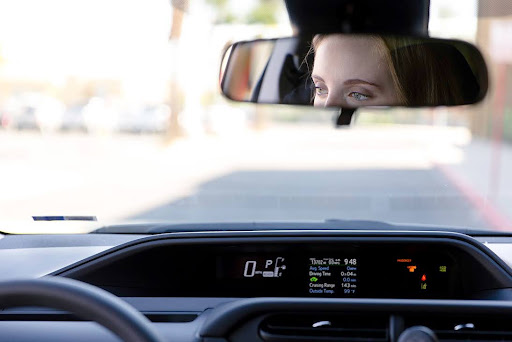
Avoid driving alongside others; if you cannot see a driver's face in their side mirror, you are hiding in their blind spot. Protect your own blind spots by setting mirrors wide, performing physical shoulder checks before every lane change, and safely altering your speed if a vehicle lingers nearby.
|
|
Pedestrians & Crosswalks
|
Scan crosswalks and intersections constantly. Arizona law heavily protects pedestrian right-of-way, and traffic fines are significantly increased within designated school zones.
|
A Note on Distractions: Arizona law strictly prohibits holding any electronic wireless device while driving. Data compiled by the Insurance Institute for Highway Safety (IIHS) reveals that crash risk is 2 to 6 times greater when drivers are actively manipulating a cellphone compared to when driving undistracted. Keep your phone locked away.
Navigating Arizona Roads: Where State Law Meets Defensive Driving
The secret to maximizing long-term road safety is knowing how to apply defensive rules when literal traffic statutes are challenged by real-world chaos:
Visual Signaling (Managing Lane Changes)
Arizona state law requires drivers to signal their intentions continuously for at least 100 feet before making any turn or lane change. In the real world, simply activating your blinker does not instantly give you the right-of-way, and aggressive drivers will often accelerate to close the gap when they see a signal. The defensive strategy is to communicate early but move only when it is entirely safe: activate your turn signal to announce your intent, check your mirrors and physical blind spots, and wait for a clear, predictable cushion of space before smoothly changing lanes.
Sharing the Road
Pedestrians hold the legal right-of-way in marked and unmarked crosswalks across Arizona, and traffic fines are heavily escalated for violations committed inside designated school zones. To manage this safely, visually scan intersections and curbs long before you reach them. Never pass a vehicle that has stopped at a crosswalk ahead of you, as they are legally yielding to a crossing pedestrian who may be completely hidden from your direct line of sight.
Zero Tolerance
Operating a motor vehicle under the influence of drugs or alcohol is strictly illegal and carries some of the harshest criminal penalties in the nation, including immediate license suspension. Safe driving starts before you turn the ignition key; always designate a sober driver or use a rideshare application if you plan on consuming any impairing substances. True defensive drivers take responsibility for their vehicle and protect their driving privilege by ensuring they have absolute focus every time they hit the road.
Understanding the Differences: Defensive Driving Courses vs. Traffic Survival School (TSS)
A common point of confusion for Arizona motorists is the structural difference between optional safety courses and mandatory legal interventions:
-
Defensive Driving (Optional / Preventative): This is typically a 4-hour course that eligible drivers can take voluntarily to refresh safety knowledge, earn insurance discounts, or achieve a legal Ticket Dismissal to keep points off their record after a minor violation. If you need to protect your record, view our program for Defensive Driving.
-
Traffic Survival School (TSS) (Mandatory / Corrective): TSS is an 8-hour, state-mandated course triggered by a Corrective Action Notice from the MVD after severe violations (such as running a red light or accumulating too many points). Fulfilling this is mandatory to prevent license suspension.
How Defensive Driving Habits are Built into Comprehensive Driver’s Education
While a standalone defensive driving course is a short seminar often used for ticket dismissal, Driver’s Education is an in-depth instructional program designed to teach beginners how to operate a vehicle safely from scratch.
At Stop and Go Driving School, we weave defensive driving techniques directly into every stage of our comprehensive Driver’s Education curriculum. Our professional training environment completely outperforms "DIY" practice or simulation programs:
-
The "No Simulators" Promise: We believe there is no substitute for real-world experience. Every minute of our practical instruction takes place behind the wheel of an actual car on real Arizona roads.
-
Dual-Control Safety Vehicles: Our training fleet features passenger-side dual-braking systems and extended dual-mirror arrays, ensuring our certified trainers maintain physical control of the vehicle at all times.
-
Specialized Pedagogy: Our school is owned and operated by credentialed educators with specific degrees in Traffic Safety and Special Education. This background allows us to specialize in helping nervous drivers, as well as students navigating ADHD, Autism, or acute driving anxiety, feel safe and understood.
-
Skip the MVD Testing Line: As an MVD-authorized provider, students who complete our elite training registration packages qualify for a Road Test Waiver, allowing them to skip the MVD road exam and earn their license directly at our facility.
To find the right instructional tier for your budget, check out our comprehensive licensing bundles on our Packages page.
How to Enroll and Take Control of the Road
Ready to start building safe, defensive driving habits with Arizona’s premier driving institution? Registration is quick, straightforward, and entirely online:
-
Meet Our Instructors: Learn more about our patient, fingerprint-cleared, and MVD-certified teaching staff by visiting our Instructors page.
-
Find an Office Near You: We operate the largest, most accessible training network across the Valley. Find your nearest classroom hub on our Stop and Go Locations guide.
-
Select and Book: Choose your preferred calendar slot, complete your secure enrollment online, and let our team handle the rest!
Have immediate questions? Give our friendly office team a call directly at (602) 896-9606 to map out your perfect training schedule today!
Frequently Asked Questions (FAQ)
What is the three-second rule in Arizona?
The three-second rule is a defensive driving technique used to maintain a safe following distance. Note when the vehicle ahead passes a fixed object and count one-thousand-one, one-thousand-two, one-thousand-three. Your front bumper should not pass that object before you reach three. Increase this gap to four or five seconds during inclement weather, dust storms, or high freeway speeds.
Can you hold a cell phone while driving in Arizona?
No, Arizona law strictly prohibits drivers from holding or supporting any electronic wireless device with their hand or body while operating a vehicle. Only hands-free operations are legally permitted. Violating this law results in a civil traffic citation and heavily multiplies your overall crash risk.
What is the difference between Defensive Driving and Traffic Survival School (TSS) in Arizona?
The difference is whether the course is voluntary or mandatory:
-
Defensive Driving is a voluntary 4-hour safety course used for a civil Ticket Dismissal, removing points from your record, or earning insurance discounts.
-
Traffic Survival School (TSS) is a mandatory 8-hour corrective course strictly required by the MVD following a Corrective Action Notice for severe violations like running a red light. Failure to complete it results in license suspension.
Is a Defensive Driving course the same as Driver's Education?
No. A defensive driving course is a short, 4-hour seminar typically used by licensed drivers for ticket dismissal or a safety refresh. Driver’s Education is a comprehensive, multi-hour instructional program designed to teach beginners how to drive from scratch using private, In-Car Driving Lessons.
How do I bypass the MVD road test in Arizona?
You can bypass the MVD road test by completing an authorized training package with an approved third-party provider like Stop and Go Driving School. Students who successfully complete these courses receive a Road Test Waiver, allowing them to skip the MVD testing line entirely and get licensed directly at our facility.