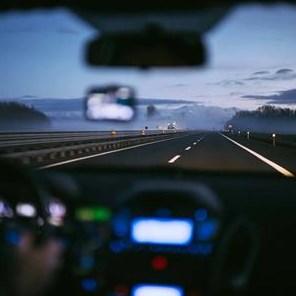
Driving at night introduces a completely different environment than driving during the day. Quiet streets and lighter traffic might seem peaceful, but the cover of darkness strips away the visual cues we rely on behind the wheel. Reduced contrast, blinding glare, and peripheral limits turn routine drives into complex decisions.
At Stop and Go Driving School, our team of certified instructors approaches behind-the-wheel driver's instruction from an educational perspective. Founded and operated by professional educators with backgrounds in Traffic Safety and Special Education, we know that handling night driving safely requires proactive strategy rather than quick reactions.
What Are the Most Critical Tips for Safe Night Driving Conditions?
Safe night driving relies on extending visual range while minimizing glare and fatigue. Essential strategies include overhauling mirror angles, utilizing the right-edge lane marking as a visual anchor against oncoming headlights, matching vehicle speed to headlight range (avoiding overdriving low beams), and ensuring all window glass remains clear inside and out.
Building real confidence behind the wheel starts with setting up your vehicle before you shift into drive, followed by key defensive habits once you hit the road:
-
Perform a complete light & glass check: Ensure headlights, brake lights, and turn signals are clean and fully operational, then wipe down internal and external windshields to prevent scatter glare.
-
Establish a right-edge visual anchor: When oncoming traffic approaches with bright lights, look toward the solid white line on the right side of your lane to maintain steering alignment without blinding your vision.
-
Avoid overdriving your headlights: Ensure your total stopping distance never exceeds the physical footprint illuminated by your light beams.
-
Adjust interior instrument panels: Dim your dashboard controls to preserve dark-adaptation in your pupils.
-
Increase following intervals: Expand your spacing from three seconds to five or six seconds to give yourself time to identify unlit obstacles.
Understanding Low-Light Driving: Sight Range vs. Stopping Distance
Daylight driving gives us a wide field of vision. At night, that view shrinks to the narrow beam created by your headlights.
Avoid Overdriving Your Headlights
"Overdriving your headlights" simply means driving too fast for the distance your lights can cover. Standard low beams illuminate the road about 160 to 200 feet ahead. When you drive too fast at night, your car travels past the lit area in the brief moment it takes your brain to notice a hazard and hit the brakes.
If an obstacle appears at the edge of your low beams while traveling at highway speeds, you cannot physically stop in time. A quick way to check your spacing is the four-second rule: pick a fixed landmark ahead and ensure at least four seconds pass after the vehicle in front of you clears it before your car reaches that same spot. In adverse conditions like rain, fog, or dust, expand this buffer even more.
Depth Perception and Loss of Contrast
During the day, your eyes naturally use surroundings and color to judge speed and distance. Darkness strips those visual cues away. Unlit pedestrians, dark clothing, stray animals, and road debris blend into the dark background.
Our certified instructors coach you to scan actively for subtle indicators, like flashes of reflective material on shoes, broken streetlight patterns on the asphalt, or sudden glints in the distance.
Taming Modern Glare: High-Beams, LEDs, and Visual Anchors
Modern LED headlights illuminate the road effectively, but they can be intensely bright for oncoming traffic. Managing brightness requires intentional scanning techniques rather than fixed staring.
The Right-Edge Visual Anchor Technique
When an oncoming car approaches with blinding high beams or misaligned LEDs, resist the natural urge to look directly at the light source.
-
Shift your focal gaze down and toward the right edge of your lane.
-
Locate the solid white fog line (or the edge of the pavement).
-
Use your peripheral vision to track the oncoming car's position while maintaining your steering track using the white line.
This technique protects your foveal vision—the center of your retina—from direct light exposure, keeping your eyes adjusted to the dark road ahead.
Proper Light Management
-
Dimming Schedule: Switch from high beams to low beams within 500 feet of an oncoming vehicle, or within 300 feet when following another car.
-
Dusk and Dawn Rules: Turn your low beams on well before sunset. Auto-headlights don't always pick up ambient twilight or sudden patches of desert dust storm haze.
-
Interior Environment: Turn down instrument panel lights. A bright center touchscreen or illuminated cabin light dilates your pupils, reducing your ability to read dark road details.
Why Hands-On, In-Car Experience Beats Simulators Every Time
You can read about glare and stopping distances, but feeling your eyes adapt to dark stretches of road requires real-world practice.
At Stop and Go Driving School, we do not use simulators. Computer monitors cannot recreate real photon glare, variable road textures, or the physical depth reduction of night driving.
Instead, our comprehensive Driver's Education programs place students directly into dual-control training vehicles alongside patient MVD-certified instructors. Our trainers hold fingerprint clearance cards and background checks. Many are former schoolteachers and law enforcement officers who understand how to guide nervous drivers through low-light conditions with calm, clear instruction.
Whether taking private behind-the-wheel lessons or choosing our Road Test Waiver packages, students practice real driving techniques in actual traffic conditions.
Defensive Driving Strategies for Nighttime Hazards
When darkness limits visibility, adopting key defensive driving strategies gives you an extra margin of safety:
-
Expand Your Scanning Pattern: Move your eyes continuously across three zones—far ahead, middle distance, and sidewalk edges. Avoid locking your gaze on the illuminated path directly ahead of your bumper.
-
Watch for Peripheral Motion: Rely on peripheral vision to pick up movement at road edges. At night, an animal or pedestrian will often show up as a faint shadow long before you can clearly see them.
-
Manage Driver Fatigue: Drowsiness slows your reaction time similarly to alcohol. If your eyelids feel heavy, you yawn repeatedly, or you drift within your lane, pull over somewhere safe. Fresh air or turned-up music won't replace real rest.
-
Plan Around High-Risk Hours: Late-night hours, especially on weekends, bring higher risks from impaired drivers. Keep extra space around erratic drivers and give yourself clear escape paths at intersections.
Taking an Arizona defensive driving course can help sharpen these observational habits and refresh your core safety skills.
Mastering Night Driving Skills
Night driving doesn't have to be intimidating. By keeping your glass clean, managing headlight glare, and adjusting your speed to match your visibility, you can navigate dark roads with confidence.
If you or your teen driver want to build real confidence behind the wheel, practice with professional instructors who prioritize safety, patience, and practical experience. Visit our local driving school centers or connect with our certified driving trainers at Stop and Go Driving School to get started.
Frequently Asked Questions About Safe Night Driving
Should I wear night-driving glasses with yellow-tinted lenses?
Yellow-tinted glasses are generally not recommended for night driving. While they may seem to reduce glare, the tinted lenses reduce the total amount of light reaching your eyes. In low-visibility environments, preserving dark-adaptation and gathering available light is essential. Clean glass surfaces offer a safer way to minimize glare.
Why do my eyes feel much more tired driving at night than during the day?
Driving at night forces your eyes to work harder. Your pupils dilate to let in light, while shifting focus between bright oncoming headlights and dark roads causes continuous eye fatigue. Taking short breaks during long nighttime drives helps relieve this strain.
How do I know if I am overdriving my headlights?
If you see an obstacle appear in your low beams and realize you cannot bring your car to a complete stop before reaching it, you are overdriving your headlights. Adjust your speed so your total stopping distance fits comfortably within the range illuminated by your lights.