Essential Driving Maneuvers to Ace Your Road Test: Master Key Skills for Success
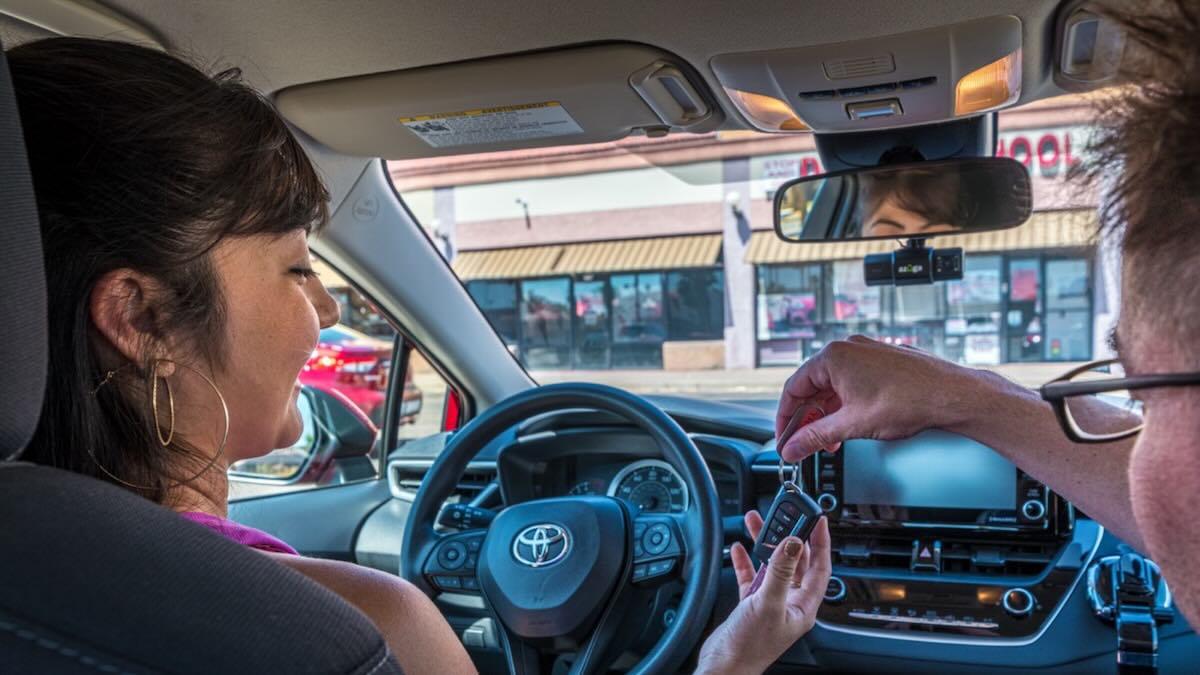
The prospect of a driving test can be a significant source of anxiety for many new drivers. Whether you are a teenager eager for independence or an adult embarking on a new journey, those required maneuvers can feel like a major hurdle. After all, it is natural to feel a bit of pressure when performing under the watchful eye of an examiner, but you do not have to face that stress alone.
Our goal at Stop and Go Driving School is to help you feel completely at ease behind the wheel. Our Driver’s Education program focuses on building your skills through clear, hands-on coaching so that every turn and park feels like second nature.
By breaking these maneuvers down step by step—using the same techniques our instructors teach during real, on-road lessons—this blog is designed to remove the guesswork and help you approach your road test with clarity and confidence.
What Are the Core Driving Test Maneuvers You Must Master?
Think of core driving maneuvers as the building blocks of vehicle control. These tasks allow you to prove to the Arizona MVD that you can respond to various traffic situations with composure and precision.
Which Maneuvers Are Commonly Tested?
Driving exams assess your ability to manage the vehicle in tight or high-pressure scenarios. Common maneuvers include:
-
Vehicle Maneuverability (Reverse 2-Point Parking): This evaluates your ability to pull past a space and back into it smoothly.
-
Pulling Parallel to a Curb: You must demonstrate that you can pull up parallel to a curb and stop safely.
-
Three-Point Turn: This assesses your ability to turn the vehicle around in a limited space safely.
-
Lane Changing: This tests your ability to move between lanes while maintaining awareness of other drivers.
-
Emergency Stop: This evaluates your ability to stop the vehicle quickly and safely in response to a hazard.
If you want to skip the stress of the MVD testing site, check out our Platinum and Gold packages, which include a Road Test Waiver.
How Do Examiners Evaluate Your Skills?
Our trainers, many of whom are former teachers or law enforcement officers, know exactly what examiners are looking for. They evaluate you based on:
-
Control: Keeping the vehicle steady and smooth.
-
Observation: Consistently checking mirrors and blind spots.
-
Speed: Maintaining an appropriate pace for the environment.
-
Accuracy: Executing the move without hitting curbs or markers.
Book Your In-Car Private Lessons Today
How to Master Vehicle Maneuverability (The "Parking Test")
While the MVD removed traditional parallel parking in 2022, you must still pass a parking maneuverability test before heading out on the road. This is often a reverse 2-point parking maneuver.
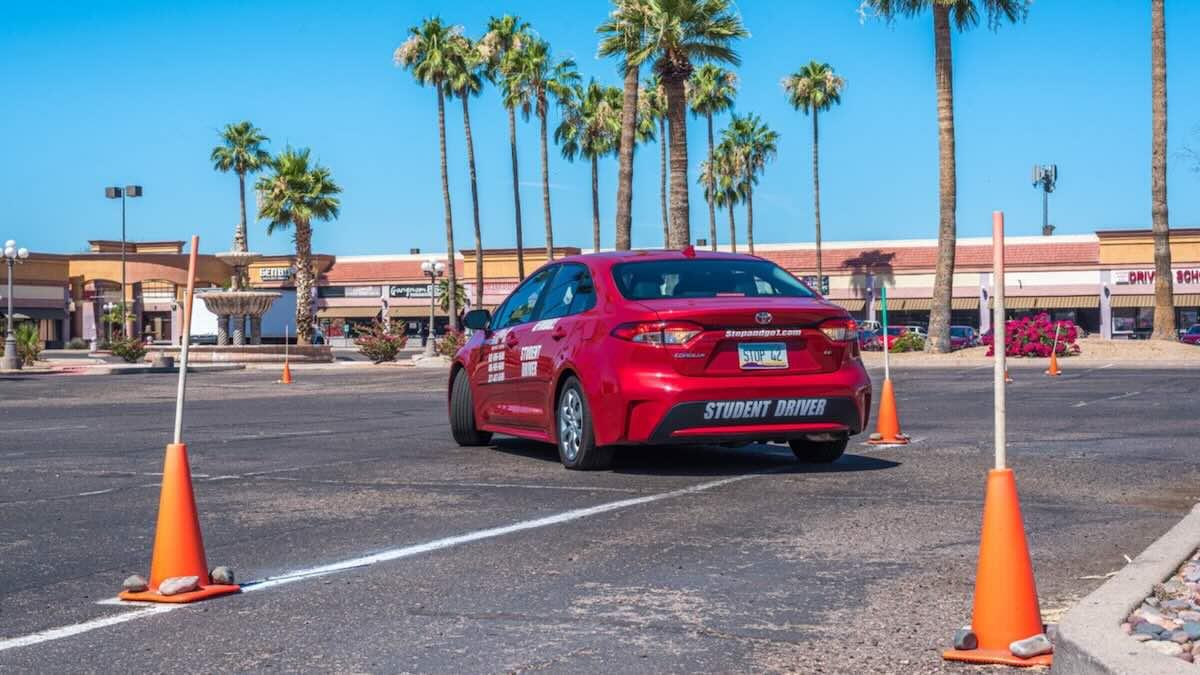
Step-by-Step Reverse Parking Techniques
-
Find Your Space: Drive slightly past the designated parking bay.
-
Signal and Position: Use your turn signal and align your vehicle so you have a clear angle to back in.
-
The Controlled Reverse: Begin reversing slowly while turning the steering wheel. Look over your right shoulder and out the back window rather than relying solely on a backup camera.
Common Mistakes to Avoid: Failing to consistently check your mirrors, blind spots, and rear window during the reverse can lead to safety deductions. Examiners expect to see clear head movement and active observation throughout the maneuver. Avoid rushing the process. At Stop and Go, we teach you to take your time and focus on precision over speed.
How to Pull Parallel to a Curb
One of the most practical skills you will demonstrate is the ability to pull up parallel to a curb and stop the vehicle safely. This maneuver is essential for roadside parking and dropping off passengers.
Step-by-Step Technique
-
Check and Signal: Check your mirrors and activate your right turn signal well in advance.
-
The Approach: Gradually steer toward the curb at a shallow angle.
-
Straighten Out: As you get close to the curb, straighten the steering wheel to bring the car parallel to the roadside.
-
The Final Stop: Stop the vehicle within 18 inches of the curb. This distance is the standard required by the MVD to ensure you are not obstructing traffic.
Expert Insight: Examiners are looking for a smooth transition. If you "scrub" the tires against the curb or stop too far away, it can lead to point deductions. Practicing this in a real car helps you get a feel for the car's width and where the wheels are positioned.
Effective Strategies for Three-Point Turns
The three-point turn is a vital skill for navigating dead-end streets or confined areas. It demonstrates that you can manage the vehicle's direction changes without losing track of your surroundings.
Essential Steps for Success
-
Signal and Check: Signal your intention and check for pedestrians or oncoming traffic.
-
The First Turn: Turn the wheel fully and move forward toward the opposite curb.
-
The Reverse: Shift into reverse, turn the wheel the opposite way, and back up to create space.
-
Drive Forward: Shift back into drive and straighten out into your new lane.
Best Practices for Safe Lane Changing
Safe lane changing is built on clear communication and defensive driving habits. We teach the MASH routine to ensure you are always safe:
-
Mirror (check center and side mirrors)
-
And
-
Signal (at least 100 feet before the move)
-
Headcheck (check that crucial blind spot)
-
Then go if it’s safe to do so!
Why the Blind Spot Check is Crucial: Mirrors are excellent tools, but they do not show everything. Checking your blind spot by looking over your shoulder is the only way to ensure a lane is truly clear. This simple habit prevents collisions with vehicles that are "hidden" right beside you.
Performing an Emergency Stop
In an emergency, reaction time is everything. This maneuver tests your ability to bring the car to a controlled, rapid halt.
The Correct Procedure
When the examiner signals for an emergency stop, you must apply the brakes firmly and consistently. Keep the steering wheel straight to ensure the vehicle does not skid or veer out of the lane. Once the car has stopped, perform a full 360-degree check of your surroundings before moving again.
Ready to Get Behind the Wheel?
At Stop and Go Driving School, we understand that learning to drive is a major milestone. Our mission is to provide you with the tools and confidence to navigate Arizona roads safely. Whether you are looking to master the perfect parallel park or want the convenience of our Road Test Waiver, our expert trainers are here to support you every step of the way.
Contact Stop and Go Driving School today or schedule your first lesson and start your journey toward becoming a licensed, defensive driver.
FAQs: Driving Test Maneuvers
What happens if I hit a curb during the parallel parking portion of the test? In the state of Arizona, touching the curb is usually a point deduction, while jumping or driving over the curb can result in an automatic failure. Our trainers help you master your reference points so you can gauge distance with confidence.
How many attempts do I get to perform a three-point turn? During an official MVD road test, you are typically expected to complete the maneuver smoothly in three movements. If you need an extra adjustment, it may result in a point deduction, which is why we practice this extensively in our in-car lessons.
Can I use a backup camera during my road test maneuvers? While many modern vehicles have backup cameras, examiners require you to demonstrate that you can park and reverse using your mirrors and over-the-shoulder checks. We teach you to rely on your own observation skills to ensure you are safe in any vehicle you drive.
What is the most common reason students fail the maneuver section? The most frequent issue is a lack of observation. Many students focus so much on the movement of the car that they forget to check their blind spots or mirrors. Our trainers emphasize a "safety first" mindset to ensure these checks become a natural habit.
Does Stop and Go provide a car for the road test? Yes. When you choose one of our Platinum or Gold packages, you can take your evaluation in our MVD-certified vehicle. This is the same car you used for training, which helps reduce anxiety during your maneuvers.